Context
A high-volume legal practice wanted to understand where AI could create real operational leverage without increasing legal, ethical, or client-confidentiality risk.
The firm was not looking for a generic legal chatbot. The problem was more operational: too many notifications to read, too many deadlines to track, too many routine documents to prepare, and too much partner or staff time spent explaining status, checking matter movement, and turning existing templates into case-specific work product.
The practice had a concentrated matter mix and a repeatable operating pattern. Most of the business came from high-volume labor-related claims, with work spread across multiple jurisdictions. The team already used LexDoctor as a core legal system and had existing templates, models, and pre-defined document structures.
That made the opportunity sharper. The first AI workflow did not need to invent legal reasoning from scratch. It needed to connect existing firm knowledge, matter updates, templates, deadlines, and human review into one controlled workflow.
Decision at Stake
Whether the practice's repeatable matter structure and templates could support controlled automation without increasing legal or brand risk, and how to transition from individual AI experimentation to a production workflow layer.
Riskiest Assumptions
- The firm had enough repeated legal operations work to justify a workflow automation layer.
- Existing LexDoctor templates and matter structures could become the foundation for controlled draft generation.
- Legal notifications and matter updates could be classified into action types: deadline, client update, draft required, follow-up, or review.
- A prototype could reduce manual coordination without replacing legal judgment.
- Human review gates could make the system useful for low- and medium-risk workflows while keeping high-risk filings under lawyer control.
- The integration approach needed to be tool-agnostic: LexDoctor first, but adaptable to other legal systems, email, calendars, portals, document stores, or local-market software.
- The same pattern could later apply outside legal, wherever an operations-heavy business runs on templates, deadlines, documents, and approvals.
What Proof Engine Did
Proof Engine started with a legal operations impact assessment rather than jumping straight into AI tooling.
The assessment mapped the firm's practice profile, jurisdictional footprint, matter lifecycle, team structure, recurring document types, notification flow, client-communication load, AI readiness, and governance gaps.
From the interview, the highest-leverage workflow became clear: the firm needed an operational layer that could read notifications and matter updates, identify what had to happen next, surface deadlines, prepare routine drafts from existing templates, and route the work to the right human reviewer.
Proof Engine then shaped and implemented a prototype around that workflow.
The prototype was designed around five operating jobs:
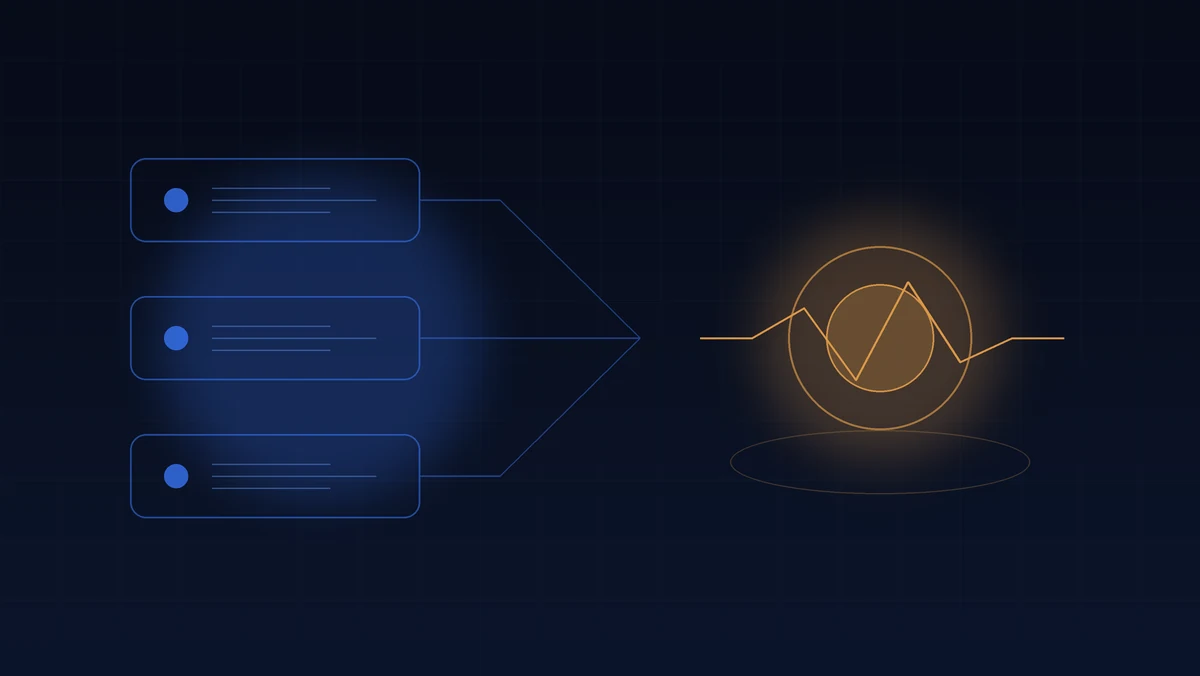
- ingest matter updates, emails, or notification text;
- classify the update by risk and required action;
- extract deadlines, missing information, and next steps;
- generate a structured draft or task using existing firm templates;
- route the output for human review before anything reaches a client, counterparty, court, or public portal.
LexDoctor was treated as the first concrete system context, not as a hard dependency. The production workflow was designed to support a broader connector strategy: where a system exposes an API, use the API; where it supports import/export, map the data structure; where the market tool is closed, use a controlled workflow bridge, RPA layer, or human-in-the-loop handoff.
This matters commercially. The value is not "we can automate one tool." The value is that the workflow can be mapped onto the tools a firm already uses.
Proof Signals
| Proof Signal | Result |
|---|
| Practice type | High-volume legal practice |
| Primary matter areas mapped | 2 |
| Revenue concentration identified | 90% / 10% matter mix |
| Jurisdictions mapped | 3 |
| Core legal system identified | LexDoctor |
| Team sectors and roles mapped | 10+ |
| Recurring task categories mapped | 25+ |
| First pilot workflow selected | Notifications, deadlines, and routine draft preparation |
| Existing template base | LexDoctor templates and firm writing models |
| Prototype status | Implemented |
| Production workflow status | In buildout |
| Human review model | Risk-tiered review gates |
| Integration strategy | Tool-agnostic connector / workflow bridge |
| ROI focus | Faster response time, higher realization, lower locked-up capital |
| Expansion path | Legal firms, legal-tech partners, and operations-heavy businesses |
What This Proved
The assessment showed that the strongest opportunity was not broad AI adoption. It was workflow-specific automation around legal operations.
The firm already had the right raw material: repeatable matter types, existing templates, recurring procedural steps, staff roles organized around case stages, and a clear pain around response speed.
It also had the typical AI adoption gap seen in many professional-service firms: leadership interest, individual experimentation, limited training, no mature AI policy, and uncertainty around how to move from ChatGPT-style usage to controlled workflow execution.
The prototype clarified the right architecture for the production buildout:
- AI should not act as an unsupervised lawyer.
- AI should operate as a workflow engine around notifications, tasks, drafts, templates, and review gates.
- Low-risk work can move toward automation.
- Medium-risk work needs structured review.
- High-risk legal filings, legal arguments, and citation-heavy work need explicit lawyer verification.
The result was a reusable pattern for legal firms and legal-tech partners: start with the firm's real operating loop, connect the systems already in use, and automate the repeatable workflow before attempting broader AI transformation.
What Remains Unproven
- Before/after reduction in triage or drafting time.
- Deadline extraction accuracy.
- Draft quality and lawyer review burden.
- Adoption by staff over repeated use.
- Measured economic impact such as faster realization or lower locked-up capital.
- Production reliability and governance over time.
Recommended Next Proof Gate
Measure a live pilot or production-beta workflow against baseline notification triage time, deadline extraction accuracy, draft preparation time, lawyer review time, staff adoption, exception rate, and operational ROI.
Outcome
The engagement turned a broad "we should use AI" question into a concrete legal operations workflow.
Instead of asking lawyers to become prompt engineers, Proof Engine implemented a prototype that translated the firm's existing work patterns into an AI-assisted operating layer: notifications, deadlines, templates, routine drafts, matter status, and human review.
The production workflow is being built around the same principle. It starts with the firm's current system, LexDoctor, but the architecture is intentionally tool-agnostic. The same approach can connect to other legal platforms, local-market tools, email, calendars, document repositories, portals, or internal systems depending on what the firm already uses.
For the firm, the practical shift was from fragmented AI experimentation to a controlled automation path. For legal-tech partners, the case shows how to turn a firm's existing matter workflow into an implementable AI product surface. For operations-heavy businesses outside legal, the same pattern applies wherever teams manage high-volume work through documents, deadlines, approvals, and recurring client communication.
Strategic Takeaway
The most valuable AI implementation in a professional-service firm is often not a standalone AI tool. It is a workflow layer that understands the firm's work, connects to the systems already in use, respects risk boundaries, and makes routine execution faster without pretending to replace expert judgment.
This case shows the pattern clearly: map the work, implement the first controlled prototype, then build the production workflow around the tools and governance the business actually needs.