
Validate
Proof and decision quality before more build, budget, or conviction.
Proof Engine Studio combines validation, product engineering, AI workflows, and GTM execution so teams can make better product decisions, ship sharper software, and create growth systems grounded in evidence.
Proof cases across 10 industries
Shipping products, platforms, and apps since
Typical Validation Sprint
Specialists we can mobilize per engagement
Validate
Proof and decision quality before more build, budget, or conviction.
Build
Product, AI workflow, and engineering work tied to evidence.
Grow
First customers, pilots, GTM motion, and early traction.
Scale & Partner
Market entry, operating systems, modernization, and co-build.
Development teams build specs before the customer is clear. Marketing teams push offers before the segment is sharp. Strategy work produces slides that never become product or pipeline.
Proof Engine keeps the product thesis, build scope, and GTM motion inside one evidence loop.
The right offer depends on stage, evidence, and what would make the next move worth it.
Should this be built at all?
Best starting point: Validation Sprint or Validation MVP Build.
Explore the path →Is the issue product, ICP, positioning, or channel?
Best starting point: MVP Diagnostics & Repositioning or Demand Validation Sprint.
Explore the path →How do we turn signal into a repeatable motion?
Best starting point: First Paying Customers, Pilot-to-Revenue, or First Traction System.
Explore the path →How do we build, instrument, or automate the next growth path?
Best starting point: Product Growth & GTM OS, Dedicated Squad, or AI Workflow Build.
Explore the path →Can we validate and ship this without a long corporate project?
Best starting point: Validation Sprint, Market Entry Proof, or AI Workflow Build.
Explore the path →Is this opportunity investable or worth deeper support?
Best starting point: Portfolio Proof Program or Co-Build / Joint GTM Partnership.
Explore the path →We do not treat validation, build, and GTM as separate phases owned by separate vendors. We run them as one evidence loop: define the riskiest assumption, build only what the test or motion needs, expose it to the right users or buyers, interpret the signal, and decide the next allocation.
A sample of what the studio and its team have shipped and proven — scroll for more, or see the full catalog below.
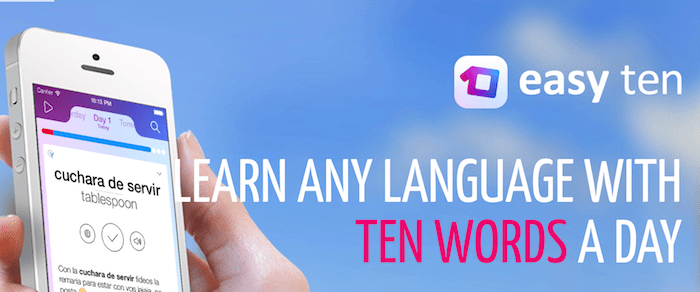 Consumer & Hospitality
After iOS 7 disrupted the early app for roughly one in three users, the product needed a full mobile rebuild, scalable backend and data processing, and a delivery team.
Reached 200,000 users in the first three months; later public reporting recorded more than 500,000 downloads and about $450,000 in seed investment after a three-month IIDF accelerator.
 Health & Telemedicine
Google Ads · EU · B2B
Demand had to be captured from clinics already looking for a telemedicine solution, which made search intent — not audience targeting — the thing to get right.
20 conversions at €288.87 from €5,777 of spend at a 5.2% click-through rate.
 Fintech & Crypto
The team needed evidence from both sides of a financing marketplace before building a broad creator platform.
Narrowed the opportunity to creators with measurable recurring income and defined underwriting as the next proof gate.
 Enterprise & Public Sector
A mission-critical system needed reliable streaming, analytics, integrations, and materially better cloud economics.
Cut cloud infrastructure cost fourfold while preserving the operational data flows the business relied on.
 Real Estate & Proptech
Meta Ads · UK · B2C
Fractional ownership had to be explained and sold inside a single ad, to people who assume property investing needs a large budget.
33 website leads at £1.93 on £63.71 of spend and a 4.69% all-click rate.
 AI & Data
Monitoring, control, analytics, and immersive visualization had to work across a high-volume enterprise data estate.
Deployed a platform processing 1+ TB per day and expanded the product surface with Unity3D, Canvas3D, and HoloLens experiences.
For teams that need proof and decision quality before more build, budget, or conviction.
Core offers: Validation Sprint, Demand Validation Sprint, MVP Diagnostics & Repositioning.
Explore Validate →For teams that need a product, workflow, AI system, or technical workstream built with product judgment.
Core offers: Validation MVP Build, V1 Product Build, AI Workflow / Internal Product Build, Product Engineering Support, Dedicated Product Squad.
Explore Build →For teams that need first customers, paid pilots, GTM motion, developer ecosystem growth, or early traction.
Core offers: GTM Motion Buildout, First Paying Customers, Pilot-to-Revenue, First Traction System, Developer Ecosystem Growth.
Explore Grow →For teams and partners that need market entry proof, growth systems, modernization, portfolio validation, or co-build work.
Core offers: Market Entry Proof, Product Growth & GTM OS, AI / Data / Cloud Modernization, Portfolio Proof, Co-Build / Joint GTM.
Explore Scale & Partner →For early ideas, product theses, mature-company initiatives, or partner opportunities that need a first proof checkpoint.
See the offer →For teams that need to turn enough proof into a real product foundation.
See the offer →For teams that need AI, automation, or internal tools tied to a real workflow and business outcome.
See the offer →For founders and early teams that need to find a niche, shape a paid offer, and get to first customer conversations.
See the offer →For companies exploring a new geography, vertical, segment, ICP, or partner channel before committing budget.
See the offer →For funds, syndicates, accelerators, and communities that want repeatable validation, build, and GTM support.
See the offer →Proof Engine's experience is broad. We organize that breadth by proof pattern, not by a raw list of industries or tools.
Open-source, DevRel, Web3 developer tools, protocol partnerships.
Supply and demand acquisition, investor onboarding, creator or asset-side structures.
DWH, governance, LLM workflows, analytics validation, high-volume data contexts.
IoT, cloud-native systems, telemetry, fintech, payments, Web3 infrastructure.
Mobile apps, marketplace apps, creator/influencer growth, consumer acquisition.
Niche selection, customer research, pilot design, early pipeline.
Proof-led execution means every product, build, AI, or GTM decision is tied to evidence from users, buyers, workflows, or the market. We start with the decision you need to make, identify the riskiest assumption, build the smallest credible test or asset, expose it to the right people, and use the signal to decide whether to continue, build, pilot, scale, or stop.
Validation is still central to how Proof Engine works, but the studio now supports the decisions that come after validation too. Teams can work with us on validation, MVP or V1 product builds, AI workflows, GTM motion, market entry, and partner programs when those workstreams need to stay connected to evidence.
Proof Engine sits between product judgment, engineering execution, and GTM learning. A dev shop usually ships a defined spec. A marketing agency usually optimizes channel output. A strategy consultant may stop at recommendations. We help define what needs to be proven, build what the proof requires, and turn the resulting signal into product or GTM action.
Proof Engine is best when a team has a meaningful decision in front of it: whether to build an idea, fix weak traction, turn early signal into pipeline, validate a new market, automate a workflow, or support a portfolio company. It is a strong fit for serious founders, seed to Series A B2B or technical teams, product operators, mature-company initiatives, and funds or venture studios.
Start with the offer family that matches the decision and evidence gap. Choose Validate when the main question is whether the opportunity deserves more investment. Choose Build when there is enough proof to create a product or workflow foundation. Choose Grow when first customers, pilots, or GTM motion are the bottleneck. Choose Scale & Partner when the work involves market entry, operating systems, modernization, portfolio support, or co-build.
A typical engagement starts by clarifying the decision, evidence standard, constraints, and next allocation. From there, Proof Engine maps the riskiest assumption, designs the smallest credible test or build scope, runs the work with real users, buyers, or internal stakeholders, and turns the signal into a recommendation: continue, build, pilot, scale, reposition, or stop.
It depends on the offer family. A Validation Sprint runs 2-3 weeks. An AI workflow or internal product build takes 4-10 weeks after discovery. A V1 Product Build takes 8-16+ weeks. GTM and market-entry programs usually run 8-12 weeks, and portfolio programs 3-6 months.
No. A Validation Sprint and Demand Validation Sprint include enough discovery inside the sprint itself, so a fit call and intake are enough. Larger builds, programs, retainers, and partnerships usually start with a short paid discovery that defines scope, timeline, team shape, and the recommended path before execution begins.
Credible proof is evidence that changes a product, GTM, investment, or operating decision. Depending on the stage, that can include paid intent, customer conversations with clear pain, LOIs, pilot opportunities, usage behavior, workflow data, retention signals, qualified pipeline, partner interest, or a strong negative signal that prevents waste.
Yes. When the evidence supports a build, Proof Engine can help create a validation MVP, V1 product foundation, AI workflow, internal tool, or product engineering workstream. The scope is shaped by what has been proven and by the next decision the product needs to support.
Yes, when the product, segment, and offer are ready enough for market contact. Proof Engine can help define the niche, sharpen the paid offer, build outreach and follow-up assets, run first customer conversations, and design pilot paths. The goal is credible commercial signal and a repeatable learning loop, not vanity activity.
Yes. Proof Engine builds AI workflows, internal tools, automation systems, data/analytics workstreams, and operating systems when there is a real workflow and business outcome to prove. The work should answer questions such as who uses it, what decision or task improves, how value is measured, and whether the workflow deserves a larger platform investment.
Then the engagement has done its job. A strong negative signal can save budget, focus the roadmap, expose a weak ICP, reveal a channel problem, or point to a smaller opportunity. Proof Engine's role is to make the next move clearer, even when the answer is to stop, narrow the scope, reposition, or test a different path.
No. Proof Engine does not guarantee customers, revenue, pilots, fundraising, or investor outcomes. We design the work to improve decision quality, generate credible signal, create better customer conversations, and make the next product or GTM allocation less speculative.
You do. IP for everything Proof Engine builds under a paid engagement transfers to the client. We may describe the work afterwards, but only anonymized or with your explicit permission — every proof point is classified by permission level before it is published. See how proof is published.
The minimum engagement is $4,500, which covers a two-to-four-week scope. Everything beyond that is scoped per situation, because a validation sprint, V1 build, AI workflow, first-customer program, market-entry test, and partner engagement require different levels of effort. If the budget is still uncertain, share the constraint and the decision first.
The studio runs from two core locations: Buenos Aires, Argentina and Belgrade, Serbia. Between them the team covers American and European working hours, and the extended bench adds further coverage when an engagement needs it. Tell us where your team sits.
No. Proof Engine can hold the product, engineering, and GTM work itself. What matters more is a clear decision, a real constraint, and someone who can act on the outcome. The poor fit is a team with no budget, no urgency, and no concrete decision, regardless of technical background.
You are probably too early if there is no budget, no urgency, and no concrete decision to make. Being pre-product, pre-revenue, or pre-team is not too early: validation exists for exactly that point. The test is whether something actually changes based on what the work finds.
Bring the decision you need to make, the stage you are in, the evidence you already have, and what would make the next move worth it. Useful context includes the product or idea, target customer, current traction, constraints, budget range, timeline, and any brief, deck, demo, analytics, or customer notes you can share.
Tell us where you are, what you are trying to prove, and what would make the next move worth it.
If you would rather talk it through before sending a brief, book a short routing call and we will point you to the right next step.